Rosacea & Facial Redness Treatment
Serving Holt, Okemos & b
- Candela GentleMax Pro Plus
- FDA-cleared vascular laser
- All skin types
- MD-supervised
Medically reviewed by Palwasha Mohmand, RN · Medical Director-supervised care
Real results from real clients
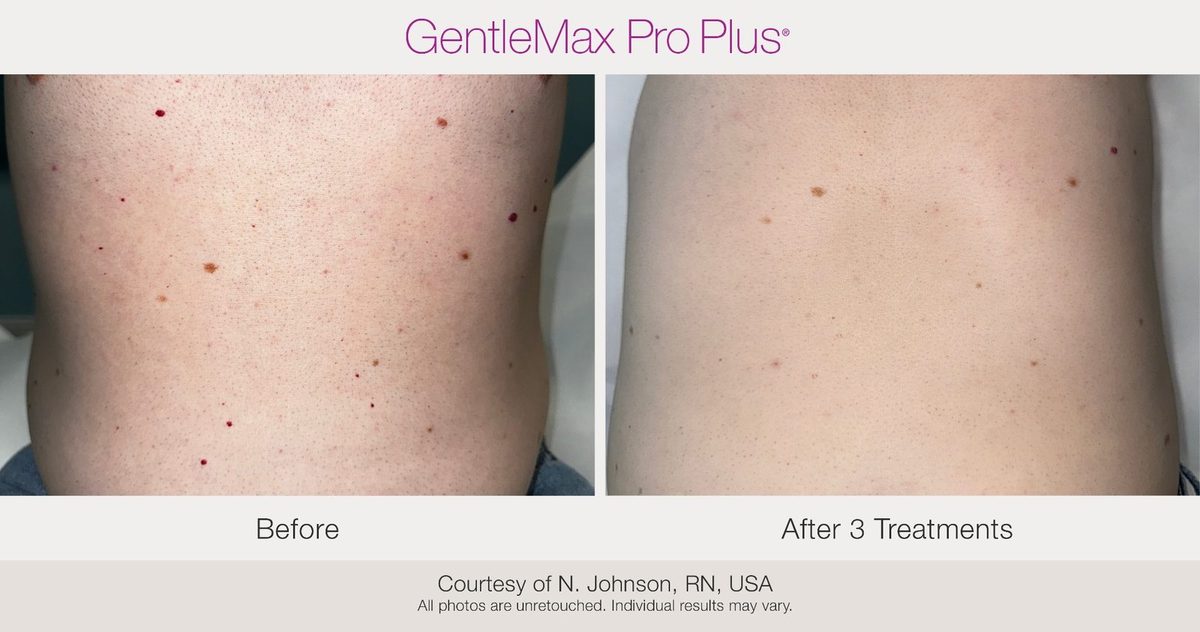
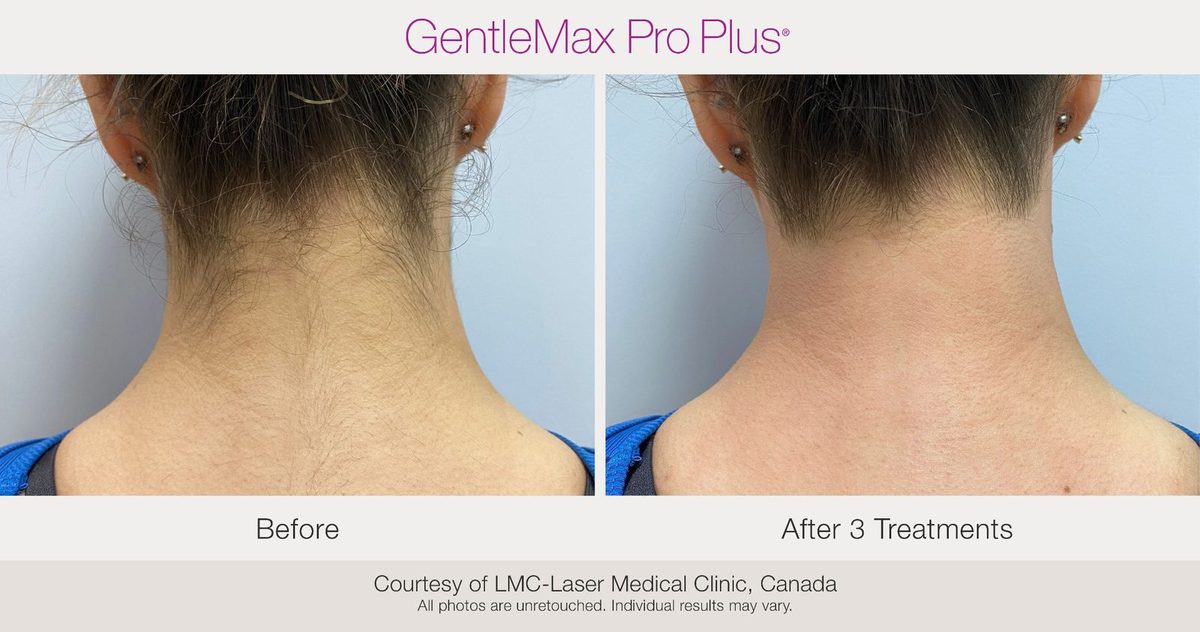
Results may vary. Photos are of actual Maison Zolara LLC clients.

What is Rosacea & Facial Redness Treatment?
Rosacea affects an estimated 16 million Americans, according to the American Academy of Dermatology ↗, and it is one of the most undertreated chronic skin conditions because patients often assume nothing can be done. At Maison Zolara, located at 4820 W Saginaw Hwy in west Lansing, we take a different approach: we begin with barrier repair and trigger management — the clinical foundation — and then layer in vascular laser treatment to address the visible redness, telangiectasia, and flushing that skincare alone cannot reach.
How it works
- 1
Step 1: Complimentary Consultation
Your journey begins with a no-obligation consultation with one of our licensed RN clinicians.
- 2
Step 2: Pre-Treatment Prep
In the 2–4 weeks before your first session, avoid prolonged sun exposure and tanning.
- 3
Step 3: The Treatment Session
The treatment room is calm and private.
- 4
Step 4: Immediately After
Mild redness and warmth are expected immediately after treatment — similar to a moderate sunburn or a temporary rosacea flare.
What It Treats
Treats:

Is it right for you?
Managing Rosacea First: Calm Before You Treat
This section comes before the treatment experience for a reason. Rosacea is a chronic inflammatory condition — and the most effective long-term outcomes from laser treatment come when the skin is as calm and well-supported as possible going in. At Maison Zolara, we emphasize this sequence:
1. Barrier Repair First
Many rosacea patients have a compromised skin barrier — the protective layer of lipids and proteins that keeps moisture in and irritants out. A damaged barrier amplifies flushing, redness, and sensitivity. Before and throughout your laser series, we recommend a simplified, fragrance-free skincare routine built around ceramide-containing moisturizers, gentle cleansers, and skin-identical lipids. This is not optional — it is the clinical foundation that makes laser treatment more effective and better tolerated.
2. Identify and Manage Your Triggers
The American Academy of Dermatology identifies common rosacea triggers including UV exposure, heat, spicy foods, alcohol (especially red wine), exercise, hot beverages, stress, and certain skincare ingredients. ↗ Keeping a trigger diary in the weeks before your first session helps your clinician understand your baseline reactivity and customize your management plan.
3. Daily SPF 30+ — Non-Negotiable
UV exposure is the most consistent and damaging rosacea trigger, and it counteracts the results of laser treatment. A mineral-based SPF 30+ applied every morning is required as part of your rosacea management protocol. Mineral formulas (zinc oxide, titanium dioxide) are generally better tolerated by rosacea skin than chemical UV filters.
4. Then: Vascular Laser
Once the barrier is supported and triggers are identified, vascular laser treatment addresses what skincare cannot: the structural vascular changes — dilated capillaries, chronic erythema, telangiectasia — that have developed over time. Laser is a tool within a management plan, not a standalone solution.
A 2024 prospective study using facial skin analysis to assess rosacea patients' response to vascular laser therapy found measurable, quantifiable improvement in redness and vessel visibility following treatment, supporting laser as an evidence-based management modality for this condition. ↗
Am I a Good Candidate?
You May Be a Good Candidate If…
- You have persistent facial redness, visible capillaries, or flushing that is not responding to skincare alone
- You have been diagnosed with ETR or PPR rosacea and are looking for a laser-based management option
- Your skin is currently calm — not in an active inflammatory flare
- You are committed to a consistent barrier-repair skincare routine and daily SPF as part of your management plan
- You have realistic expectations: rosacea is managed, not cured, and maintenance treatments will be part of your long-term plan
- You are not currently on isotretinoin (or have completed a course at least 6 months prior)
- You are not pregnant or breastfeeding
You May Not Be a Candidate If…
- You are currently in an active, inflamed rosacea flare — we may recommend waiting until the skin calms before treating
- You have a history of keloid scarring or certain connective tissue disorders
- You are on photosensitizing medications — your clinician will review your full medication list at consultation
- You have had recent excessive sun exposure or a sunburn in the treatment area
- You have active skin infections, open wounds, or cold sores in the treatment area
- Your primary concern is phymatous rosacea (skin thickening) — this subtype is less responsive to vascular laser alone
Before and after your visit
Understanding Rosacea
Rosacea is a chronic inflammatory skin condition that primarily affects the central face — the cheeks, nose, chin, and forehead. It is characterized by episodic flushing, persistent redness (erythema), visible blood vessels (telangiectasia), and in some subtypes, papules and pustules that resemble acne. The exact cause is not fully understood, but research points to a combination of genetic predisposition, vascular reactivity, immune dysregulation, and environmental triggers. ↗
The Cleveland Clinic describes rosacea as a condition that "tends to flare up for weeks to months and then go away," emphasizing the cyclical nature that makes consistent management essential. ↗
The four recognized subtypes — as classified by the National Rosacea Society and referenced in dermatology literature:
- Erythematotelangiectatic (ETR) Rosacea — The most common subtype: persistent central facial redness with visible capillaries, frequent flushing, and skin sensitivity. Vascular laser is the primary evidence-based treatment modality for ETR rosacea.
- Papulopustular (PPR) Rosacea — Redness combined with acne-like breakouts (papules and pustules), often misdiagnosed as acne. A 2025 high-energy Nd:YAG study found meaningful improvement in PPR after laser treatment. ↗
- Phymatous Rosacea — Skin thickening, most commonly on the nose (rhinophyma). This subtype is less responsive to vascular laser and typically requires additional interventions.
- Ocular Rosacea — Affects the eyes, causing redness, dryness, and irritation. Ocular rosacea requires evaluation by an ophthalmologist.
At Maison Zolara, our vascular laser protocol is most effective for ETR and PPR rosacea — the subtypes characterized by visible redness, flushing, and telangiectasia. Candidacy for each subtype is assessed at your complimentary consultation.
What to Expect
Step 1: Complimentary Consultation
Your journey begins with a no-obligation consultation with one of our licensed RN clinicians. They will assess your rosacea subtype, skin type (Fitzpatrick I–VI), current skincare routine, trigger patterns, and treatment history. If you are actively using topical prescription treatments (metronidazole, azelaic acid, ivermectin), your clinician will discuss how to sequence these with your laser sessions. They will also review contraindications — including photosensitizing medications, recent sun exposure, and active skin infections — before any treatment is scheduled.
Step 2: Pre-Treatment Prep
In the 2–4 weeks before your first session, avoid prolonged sun exposure and tanning. Discontinue retinoids and active exfoliants as directed by your clinician. Arrive to your appointment with clean, makeup-free skin. Avoid heat-generating activities (sauna, vigorous exercise) on treatment day.
Step 3: The Treatment Session
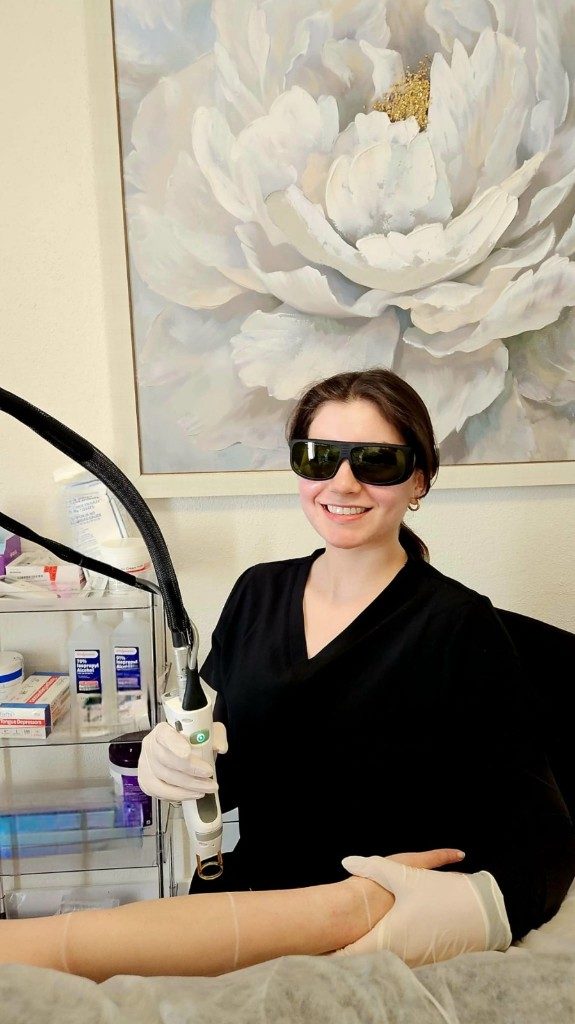
The treatment room is calm and private. Your clinician will apply protective eyewear and begin the session with a gentle assessment of your skin's current state. The Candela handpiece is passed over the treatment area in deliberate, targeted passes. Each pulse delivers a brief burst of energy followed by immediate cooling. Most patients describe the sensation as a series of warm snaps — tolerable and brief. A full-face session typically takes 20 to 40 minutes depending on the area and density of treatment needed.
Step 4: Immediately After
Mild redness and warmth are expected immediately after treatment — similar to a moderate sunburn or a temporary rosacea flare. Some patients see a slight darkening or bruise-like response around treated vessels; this is a normal sign that the laser has engaged the target. Your clinician will apply a calming serum or mineral SPF before you leave. You may return to normal light activities the same day.
Step 5: Recovery and Follow-Up
Post-treatment redness typically resolves within 24–72 hours. Visible vessel clearance continues over 2–4 weeks as treated vessels are reabsorbed. Your clinician will schedule your next session 4–6 weeks out and assess progress at each visit. Most patients notice cumulative improvement building across their series.
Aftercare
First 48–72 Hours
Avoid heat: no saunas, steam rooms, hot yoga, or vigorous exercise for 48–72 hours post-treatment. Heat exacerbates the temporary vascular response and can intensify post-treatment redness. Keep skin cool, clean, and moisturized. Apply mineral SPF 30+ every morning — this is essential, not optional. Avoid active skincare ingredients (retinoids, AHAs, BHAs, vitamin C) for at least 72 hours. Do not pick, rub, or apply pressure to treated areas.
Ongoing Management
Rosacea is a chronic condition — laser treatment is one layer of a long-term management plan. Between sessions: continue your barrier-repair skincare routine, maintain daily SPF, and actively manage known triggers. Keep your trigger diary updated and share observations with your clinician at follow-up visits. If you experience an unexpected flare between sessions, contact us before self-treating with over-the-counter products, as some common "anti-redness" products can exacerbate rosacea.
Pricing
Rosacea & Facial Redness Treatment at Maison Zolara starts From $349 per session at standard pricing. Maison Circle members start From $299 per session. Series pricing is available for patients completing a full treatment course — your clinician will discuss series options at your consultation.
Pricing is confirmed at your complimentary consultation. There is no obligation to book at that appointment.
More about Rosacea & Facial Redness Treatment
About Rosacea & Facial Redness Treatment
Our rosacea treatments are performed on the Candela GentleMax Pro Plus using a dedicated vascular and redness protocol. Rosacea cannot be cured, but it can be meaningfully managed — and the right combination of lifestyle modification, a barrier-supporting skincare routine, and evidence-based laser therapy can make a significant difference in how your skin looks and feels day to day. Pricing starts From $349 per session, with series pricing available. We serve patients from across the greater Lansing area, including Holt, Okemos, East Lansing, Mason, DeWitt, and beyond.
The Candela GentleMax Pro Plus Vascular Protocol
Maison Zolara is an authorized Candela partner. Our rosacea and facial redness treatments are performed exclusively on the Candela GentleMax Pro Plus using a dedicated vascular and redness protocol — one of the most clinically validated approaches to laser rosacea management available.
Vascular-Selective Wavelength
The GentleMax Pro Plus uses wavelength settings optimized for vascular targeting — selectively heating oxyhemoglobin in dilated blood vessels while protecting surrounding tissue. This selectivity is what allows the laser to reduce redness and telangiectasia without disrupting the skin's surface.
Contact Cooling System
The GentleMax Pro Plus incorporates an integrated cooling system that protects the epidermis throughout treatment. This is particularly important for rosacea patients, whose skin tends to be more reactive and heat-sensitive than unaffected skin.
FDA-Cleared Platform
The Candela GentleMax Pro Plus is FDA-cleared for vascular lesion treatment, including telangiectasia and facial redness. All treatments at Maison Zolara are performed under the clinical oversight of our on-staff Medical Director.
Safe for All Skin Types
The vascular protocol used at Maison Zolara is appropriate for Fitzpatrick skin types I–VI, making it a broadly inclusive option. Your clinician will confirm specific settings for your skin type at your consultation.
RN-Performed, MD-Supervised
Every rosacea treatment at Maison Zolara is performed by a licensed registered nurse (RN) clinician under the clinical oversight of our on-staff Medical Director. This is not a laser technician environment — it is a medically supervised clinical setting.
Serving the Greater Lansing Area
Maison Zolara is located at 4820 W Saginaw Hwy in west Lansing — conveniently accessible to patients throughout mid-Michigan. We regularly serve patients from:
- Holt — A short drive south on Pennsylvania Ave brings Holt residents to our west Lansing location for rosacea management and vascular laser treatment.
- Okemos — Okemos patients traveling west on Saginaw Hwy arrive directly to our clinic, making it a practical choice for residents of this east Lansing suburb.
- East Lansing — MSU-area residents and East Lansing professionals seeking medical spa-grade rosacea treatment find Maison Zolara an accessible option on the W Saginaw corridor.
- Mason — Patients from Mason heading north on US-127 reach our clinic in under 20 minutes for facial redness and rosacea laser sessions.
- DeWitt — DeWitt residents traveling west on Herbison Rd reach west Lansing for their rosacea treatment series without leaving the greater Lansing area.
- Grand Ledge — Grand Ledge patients heading east on W Saginaw Hwy reach Maison Zolara directly along their primary east-west corridor.
- Charlotte — Charlotte residents making the northward drive to Lansing for medical spa services choose Maison Zolara as their west Lansing destination for rosacea care.
- St. Johns — St. Johns patients traveling south on US-27 into Lansing have a direct route to our west Lansing clinic for vascular laser treatment.
- Williamston — Williamston residents heading west on I-96 or Saginaw Hwy reach our location for their rosacea management appointments.
We offer complimentary consultations for all new patients. To schedule, visit our booking page or call us at (517) 881-0878.
Hours: Monday–Friday 9:00 AM – 7:00 PM · Saturday 9:00 AM – 5:00 PM
Clinical References
Searle T, Al-Niaimi F, Ali FR. "Rosacea." Br J Hosp Med (Lond). 2021 Feb 2;82(2):1–8. https://pubmed.ncbi.nlm.nih.gov/33646026/
Piccolo D, Zalaudek I, Genovesi C, et al. "Long-pulsed Nd:YAG laser using an 'in motion' setting to treat telangiectatic rosacea." Ann Dermatol Venereol. 2023 Jun. https://pubmed.ncbi.nlm.nih.gov/36428121/
Smiianov V, et al. "High-energy Nd:YAG laser therapy for papulopustular rosacea: Quantitative assessment with digital image processing." Wiad Lek. 2025. https://pubmed.ncbi.nlm.nih.gov/41620863/
Zaino ML, Pixley JN, Kontzias C, et al. "Using Facial Skin Analysis to Capture Rosacea Patients' Response to Vascular Laser Therapy — A Single-Center Prospective Study." J Cutan Med Surg. 2024 Jan–Feb;28(1):69–71. https://pubmed.ncbi.nlm.nih.gov/37942569/
Say EM, et al. "Treatment Outcomes of Long-Pulsed Nd:YAG Laser for Two Different Subtypes of Rosacea." J Clin Aesthet Dermatol. 2015. https://pubmed.ncbi.nlm.nih.gov/26430486/
American Academy of Dermatology. "Rosacea: Diagnosis and Treatment." AAD.org. https://www.aad.org/public/diseases/rosacea
Cleveland Clinic. "Rosacea." my.clevelandclinic.org. https://my.clevelandclinic.org/health/diseases/9476-rosacea
Page Disclaimer: The information on this page is provided for educational purposes only and does not constitute medical advice. Clinical references are sourced from peer-reviewed research and named institutions as cited below. Individual results vary. Consult a qualified healthcare provider before beginning any treatment.
The Medical Director provides clinical oversight of treatments performed at this practice. The Medical Director does not author, review, or endorse website content.
Candela® and GentleMax Pro Plus® are registered trademarks of Candela Corporation. Maison Zolara is an authorized Candela partner.
Your provider

Your treatment will be performed by Palwasha Mohmand, RN, under medical director supervision.
Palwasha Mohmand, RN
Lead RN Injector & Aesthetic Clinician
Administers all injectable treatments, laser services, and RF protocols. Advanced certification in Sculptra biostimulators (AAFP-accredited, National Laser Institute).
Client reviews
Questions, answered
Who is a good candidate for rosacea treatment?
Adults experiencing persistent facial redness, visible blood vessels (telangiectasia), flushing, or diagnosed rosacea are typically good candidates. Because the Candela GentleMax Pro Plus vascular protocol is safe across Fitzpatrick skin types I–VI, it is appropriate for a wide range of patients. Candidacy is confirmed at your complimentary consultation, where your clinician reviews your skin type, rosacea subtype, medical history, current skincare routine, and treatment goals.
How long do rosacea treatment results last?
Results vary by individual and rosacea subtype. Most patients who complete a treatment series see meaningful reduction in redness and telangiectasia that lasts 6–18 months. Because rosacea is a chronic condition that is managed rather than cured, maintenance sessions — typically once or twice per year — help sustain outcomes. Consistent trigger avoidance, barrier repair skincare, and daily SPF 30+ are the most important factors in prolonging results between sessions.
What does rosacea treatment cost at Maison Zolara?
Rosacea treatment starts From $349 per session at standard pricing. Maison Circle members start From $299 per session. Series pricing is available for a full treatment course. Final pricing is confirmed at your complimentary consultation — there is no obligation to book.
Does the laser treatment hurt?
Most patients describe the treatment as a series of brief, warm snaps — similar to a rubber band flick — followed by immediate cooling from the device's built-in cooling system. The Candela GentleMax Pro Plus incorporates contact cooling that protects the skin surface and significantly reduces discomfort. Tolerance varies by individual; patients with active rosacea flares may be more sensitive. Your clinician will adjust settings to keep you comfortable throughout the session.
Is there downtime after rosacea laser treatment?
Most patients experience mild redness or flushing for 24–48 hours after treatment — which can look like a temporary rosacea flare. Some patients see a brief purpuric (bruise-like) response as treated vessels begin to clear, which typically resolves within 7–10 days. Most patients return to normal activities the day of or day after treatment. We recommend avoiding heat exposure, vigorous exercise, and active skincare ingredients for 48–72 hours post-treatment.
How many sessions are needed?
Most patients complete 3–5 sessions spaced 4–6 weeks apart for optimal management of redness and telangiectasia. The exact number depends on your rosacea subtype, severity, skin type, and goals — your clinician will recommend a personalized series plan at your consultation.
Will the laser make my rosacea worse?
When performed correctly on appropriate candidates, vascular laser treatment does not worsen rosacea — it is a recognized management tool in dermatology literature. However, treating during an active flare can increase sensitivity and temporary post-treatment redness. Your clinician will assess your skin at each appointment and may recommend delaying treatment if your rosacea is actively inflamed.
Can I combine rosacea laser treatment with other treatments?
Yes. Many patients pair their vascular laser series with a medical-grade skincare routine, barrier repair products, or a Laser Genesis photofacial for comprehensive skin health. Your clinician will recommend a sequenced treatment plan that addresses both the vascular component and overall skin quality at your consultation.
What is the difference between rosacea treatment and a photofacial?
Both services use the Candela GentleMax Pro Plus, but with different protocols. The rosacea and vascular redness protocol uses targeted settings and techniques optimized for selectively treating blood vessels, telangiectasia, and diffuse erythema. The Laser Genesis photofacial uses a non-ablative 1064nm setting focused on collagen remodeling, overall tone, and skin quality. Some patients benefit from both, and your clinician can explain the appropriate sequencing at your consultation.
Ready to see if Rosacea & Facial Redness Treatment is right for you?
Book a free consultation with Palwasha. We’ll talk through your goals and create a personalized plan. No pressure, no surprise pricing.