Hyperpigmentation Treatment
Maison Zolara delivers MD-supervised laser hyperpigmentation treatment in west Lansing, targeting excess melanin with the Candela…
- Candela GentleMax Pro Plus
- FDA-cleared technology
- All skin types
- MD-supervised
Medically reviewed by Palwasha Mohmand, RN · Medical Director-supervised care
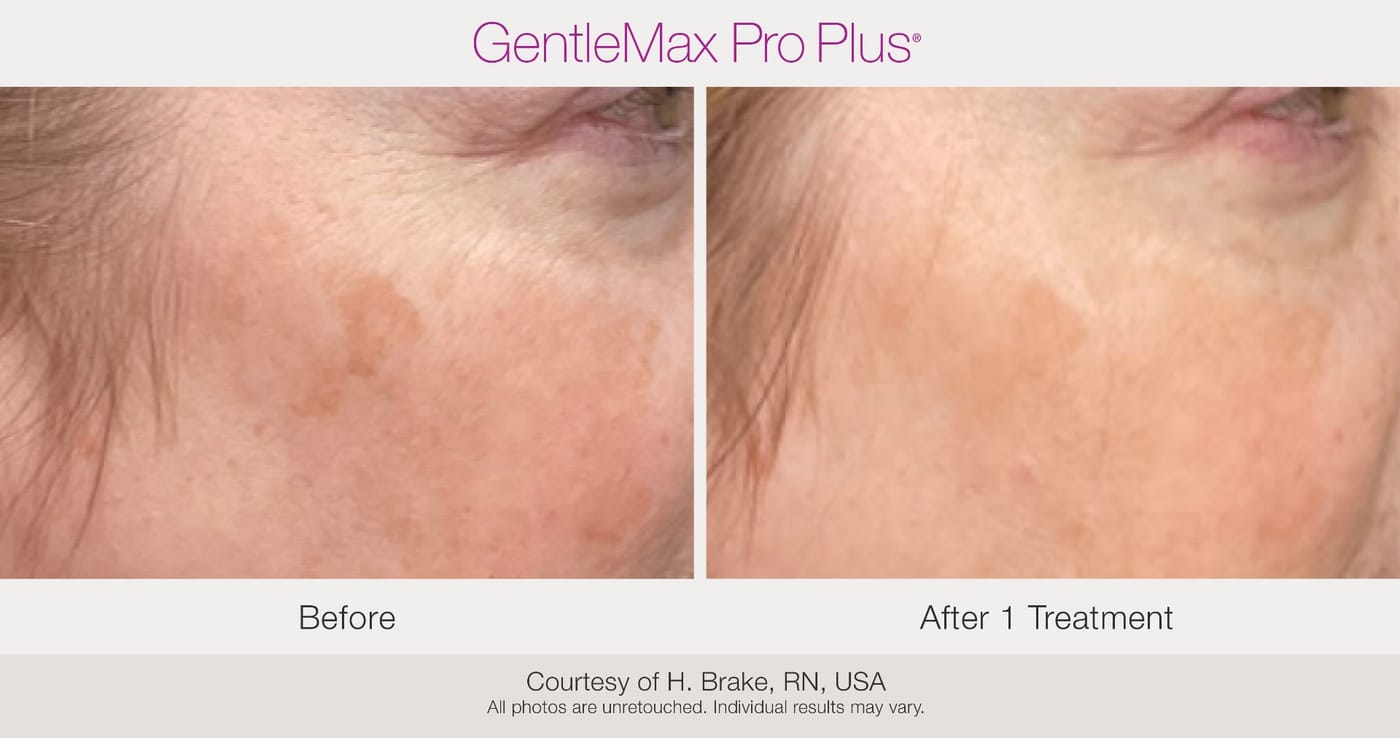
Real results from real clients
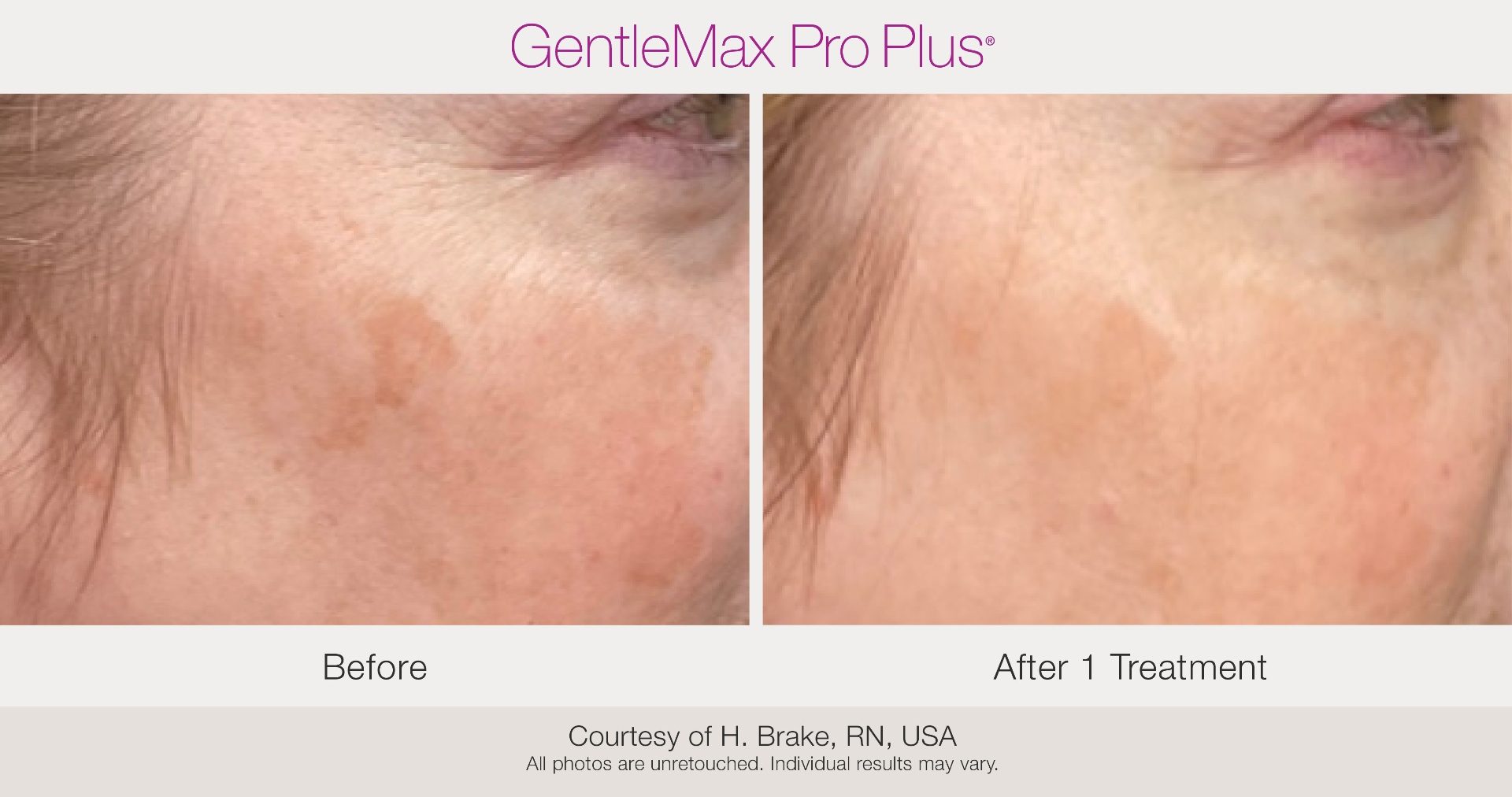

Results may vary. Photos are of actual Maison Zolara LLC clients.

What is Hyperpigmentation Treatment?
Uneven skin tone can feel alarming and emotionally distressing — and it's one of the most common concerns we hear from patients across the greater Lansing area. Whether you're dealing with dark spots left behind by acne, hormonally driven melasma, or post-inflammatory marks that simply won't fade, you deserve a clear path forward with a credentialed clinical team who can actually treat your skin safely. At Maison Zolara, our licensed registered nurse (RN) clinicians perform every laser treatment under the clinical oversight of our on-staff Medical Director, so you're never navigating this alone.
How it works
- 1
Before Your Treatment
Your journey begins with a free consultation at our west Lansing studio at 4820 W Saginaw Hwy.
- 2
During Treatment
Sessions typically take 20–45 minutes depending on the treatment area.
- 3
After Treatment
Immediately following treatment, the treated area may appear slightly red and the pigmented spots may temporarily darken — this is a normal and…

What It Treats
Hyperpigmentation is an umbrella term covering several distinct presentations. Understanding which type you have is the first step to choosing the right protocol.
Treats:
Is it right for you?
Device Comparison
Understanding how the Candela GentleMax Pro Plus compares to other common modalities helps patients make informed decisions.
| Feature | Candela GentleMax Pro Plus | IPL (Intense Pulsed Light) | Chemical Peel | Topical Lighteners |
|---|---|---|---|---|
| Wavelength precision | Dual-wavelength laser (755 nm / 1064 nm) | Broad-spectrum light | N/A (chemical exfoliant) | N/A (topical agent) |
| Skin tone range | Fitzpatrick I–VI with appropriate wavelength selection | Generally limited to lighter skin tones | Varies by peel depth and formulation | Broad range, but results vary |
| Depth of treatment | Epidermis and upper dermis | Primarily epidermal | Epidermal to superficial dermal | Epidermal only |
| Downtime | Minimal (mild redness 24–48 hrs) | Minimal to mild | Varies (mild to moderate) | None |
| Sessions typically needed | 3–6 | 3–6 | Series recommended | Ongoing daily use |
| Clinical supervision required | Yes — RN-performed, MD-supervised | Varies by provider | Varies by provider | No |
Maison Zolara does not offer IPL Photofacial, chemical peels as a standalone pigmentation treatment, or topical lightening agents as in-office services. The comparison above is provided for educational context only.
Safety & Skin Tone
This is the section that national health publishers consistently fail to address with the specificity that patients with melanin-rich skin deserve — and it's one of the most important conversations we have at our west Lansing studio.
Laser pigmentation treatment requires careful parameter selection for patients with Fitzpatrick skin types IV–VI. The core risk is post-inflammatory hyperpigmentation (PIH) as a treatment side effect — meaning that an aggressive or poorly calibrated laser treatment can worsen the very condition it was intended to address. This is not a reason to avoid laser treatment; it is a reason to choose a provider who understands the science and has the clinical protocols to mitigate this risk.
Skin Tone Safety Notice: Patients with Fitzpatrick skin types IV–VI are at elevated risk for treatment-induced PIH if laser parameters are not appropriately adjusted. The 1064 nm Nd:YAG wavelength on the Candela GentleMax Pro Plus is specifically selected for these patients because of its reduced affinity for epidermal melanin. Our licensed RN clinicians conduct a thorough Fitzpatrick skin type assessment at every consultation before any treatment is planned.
Melasma requires a separate conversation. Because melasma is hormonally driven and deeply linked to ongoing triggers (UV exposure, visible light, hormonal fluctuations), it is a chronic condition requiring ongoing management — not a single-session cure. The American Academy of Dermatology notes that laser and light treatments for melasma should be used adjunctively alongside sun protection and, where appropriate, topical therapies. ↗ Patients with melasma should expect a management plan, not a one-time fix, and should be counseled on the importance of rigorous daily broad-spectrum SPF use — including on cloudy days and indoors near windows.
Our safeguards include:
- Fitzpatrick skin type assessment at every consultation
- Wavelength selection matched to skin tone
- Conservative fluence (energy) settings with gradual titration
- Mandatory sun avoidance and SPF protocol post-treatment
- Follow-up assessment before each subsequent session
Alternatives
Laser pigmentation treatment is one tool in a broader toolkit. The right approach depends on your skin type, the type of hyperpigmentation, its depth, and your lifestyle. Here is a neutral overview of the landscape.
Laser Treatment (Candela GentleMax Pro Plus)
A targeted, in-office treatment that uses selective photothermolysis to fragment melanin deposits. Best suited for discrete pigmented lesions, PIH, and diffuse uneven tone. Requires a series of sessions and strict sun protection. Fitzpatrick-appropriate wavelength selection is essential. Results are typically visible within weeks of the first session and continue to improve over the treatment series.
Non-Laser Alternatives
Chemical peels (available at Maison Zolara — see our chemical peels page) use acid-based exfoliants to accelerate cell turnover and reduce surface pigmentation. Topical lightening agents (prescription or OTC) work at the melanocyte level to inhibit melanin production — these are often used as adjunctive therapy alongside laser treatment. Neither modality offers the same depth of targeting as laser for established pigmented lesions, but both have a role in comprehensive pigmentation management.
For patients with acne-related PIH, our acne treatment page covers how addressing active breakouts is often the first step in preventing new pigmentation from forming.
Am I a Good Candidate?
Hyperpigmentation treatment with the Candela GentleMax Pro Plus is appropriate for a wide range of patients — including patients with darker skin tones who may have been told elsewhere that laser treatment isn't suitable for them. The dual-wavelength platform and our clinical protocols are specifically designed to treat the full Fitzpatrick spectrum safely.
The following framework helps set expectations, though a consultation is always required before any treatment plan is confirmed.
Good Candidates
- Adults with PIH from acne, eczema, or skin injury
- Patients with diffuse uneven skin tone or blotchiness
- Patients with melasma seeking adjunctive laser management alongside sun protection
- Fitzpatrick skin types I–VI (with appropriate wavelength selection)
- Patients committed to strict sun protection before and after treatment
- Patients in the greater Lansing area including Mason, DeWitt, and Williamston
Not a Good Fit
- Active skin infections or open wounds in the treatment area
- Recent significant sun exposure or active tan
- Pregnancy (laser treatments are deferred until postpartum)
- Patients on photosensitizing medications without physician clearance
- Patients with a history of keloid scarring (requires individual assessment)
- Patients unwilling or unable to commit to post-treatment sun protection
Before and after your visit
How It Works
Hyperpigmentation occurs when melanocytes — the pigment-producing cells in the skin — generate excess melanin in response to a trigger. According to a 2024 update to the StatPearls clinical reference published by the National Institutes of Health, post-inflammatory hyperpigmentation is a common acquired disorder that follows skin inflammation or injury, and is more prevalent and more severe in individuals with darker skin tones, particularly those with Fitzpatrick skin types III–VI. ↗
Laser-based treatments work through a principle called selective photothermolysis: the laser emits a specific wavelength of light that is preferentially absorbed by melanin in the skin. The targeted melanin absorbs the energy, is fragmented, and is gradually cleared by the body's natural processes — leaving surrounding tissue intact. The result, over a series of sessions, is a more uniform skin tone.
According to a 2023 peer-reviewed study published in American Journal of Clinical Dermatology by MedStar Georgetown University Hospital, laser-based devices can be used effectively for post-inflammatory hyperpigmentation in Fitzpatrick skin phototypes III–VI when parameters are carefully selected. ↗
The key phrase is carefully selected. Not all laser settings are appropriate for all skin tones, and this is precisely why clinical supervision matters — a point we address in detail in the Safety section below.
What to Expect
Before Your Treatment
Your journey begins with a free consultation at our west Lansing studio at 4820 W Saginaw Hwy. Our licensed RN clinicians will assess your skin tone using the Fitzpatrick scale, review your medical history (including any medications that increase photosensitivity), identify the type and depth of your hyperpigmentation, and develop a personalized treatment plan. You'll receive pre-treatment instructions including sun avoidance for at least two weeks prior and discontinuation of any photosensitizing topicals (retinoids, AHAs) as directed. No makeup on the day of treatment.
During Treatment
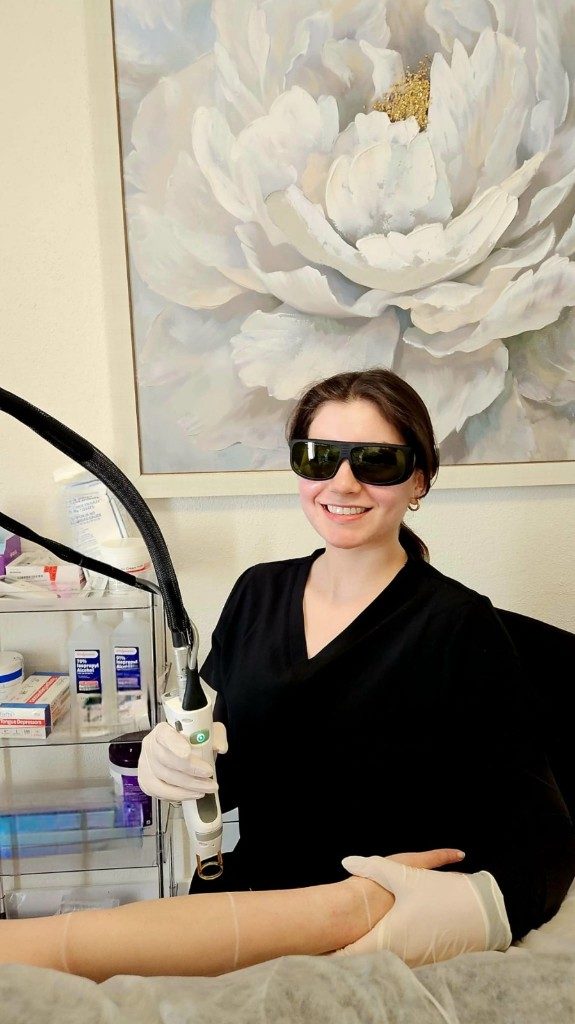
Sessions typically take 20–45 minutes depending on the treatment area. The Candela GentleMax Pro Plus's integrated Dynamic Cooling Device delivers a brief cryogen spray before each pulse, significantly reducing discomfort. Most patients describe the sensation as a quick snap followed by a cooling sensation. No topical anesthetic is typically required, though it can be discussed at consultation. You'll wear protective eyewear throughout.
After Treatment
Immediately following treatment, the treated area may appear slightly red and the pigmented spots may temporarily darken — this is a normal and expected response indicating that the melanin has absorbed the laser energy. This darkening typically resolves within 7–14 days as the fragmented pigment rises to the surface and flakes away naturally. Strict sun avoidance and broad-spectrum SPF 30+ (applied daily, reapplied every two hours outdoors) are non-negotiable post-treatment requirements. Results continue to develop over 4–6 weeks following each session.
Aftercare
Proper aftercare is essential to achieving the best possible results and protecting your skin between sessions. The most important thing you can do after laser pigmentation treatment is protect the treated skin from UV exposure — sun exposure after treatment can re-trigger melanin production and undo your progress.
Do
- Apply broad-spectrum SPF 30+ every morning, rain or shine
- Reapply sunscreen every two hours when outdoors
- Keep the treated area clean and moisturized
- Use gentle, fragrance-free cleansers for the first week
- Wear a wide-brim hat when outdoors
- Let darkened spots flake away naturally — do not pick
- Attend all scheduled follow-up sessions
Avoid
- Direct sun exposure for at least 2 weeks post-treatment
- Tanning beds or self-tanner on treated areas
- Picking, scratching, or exfoliating treated skin
- Retinoids, AHAs, BHAs, or other active ingredients for 5–7 days
- Hot showers, saunas, or steam rooms for 48 hours
- Strenuous exercise for 24–48 hours post-treatment
- Applying makeup to visibly irritated skin
Pricing
Hyperpigmentation treatment at Maison Zolara is priced transparently, with final pricing confirmed at your free consultation based on the treatment area, number of sessions recommended, and your individual skin assessment.
- Standard pricing: From $275 per session
- Maison Circle member pricing: From $235 per session
- Package pricing: From $1,299 for a multi-session package
Maison Circle members receive member pricing on hyperpigmentation treatment and can track their treatment journey in the Zolara Care app (available on the App Store). Learn more about membership →
All pricing is confirmed at consultation. Final session count depends on the type, depth, and extent of pigmentation, as well as individual skin response.
More about Hyperpigmentation Treatment
About Hyperpigmentation Treatment
Hyperpigmentation treatment at our west Lansing studio starts From $275 per session. Maison Circle members receive member pricing starting From $235 and can track their treatment journey in the Zolara Care app (available on the App Store).
Candela GentleMax Pro Plus
The device at the center of our pigmentation protocol is the Candela GentleMax Pro Plus — a dual-wavelength laser platform that combines a 755 nm Alexandrite laser with a 1064 nm Nd:YAG laser in a single system. This dual-wavelength capability is clinically significant: it allows our licensed RN clinicians to select the most appropriate wavelength for each patient's skin tone and pigmentation type, rather than applying a one-size-fits-all approach.
755 nm Alexandrite Wavelength
The Alexandrite wavelength is highly absorbed by melanin, making it effective for targeting superficial pigmented lesions in lighter skin tones (Fitzpatrick types I–III). It delivers precise energy to melanin-rich cells while the integrated Dynamic Cooling Device™ (DCD) protects the surrounding epidermis with a cryogen spray.
1064 nm Nd:YAG Wavelength
The longer Nd:YAG wavelength penetrates deeper into the dermis and is less aggressively absorbed by epidermal melanin — making it the preferred choice for patients with medium to deep skin tones (Fitzpatrick types IV–VI). This is the wavelength that allows us to treat a broader range of skin tones safely, including patients who may have been told elsewhere that laser treatment isn't an option for them.
Dynamic Cooling Device (DCD)
The integrated cryogen cooling system delivers a millisecond burst of cooling to the skin surface immediately before each laser pulse. This dramatically reduces surface discomfort and helps protect the epidermis — particularly important when treating patients with higher melanin content in the skin.
FDA-Cleared Platform
The Candela GentleMax Pro Plus is FDA-cleared for the treatment of pigmented lesions, among other indications. Maison Zolara is an authorized Candela partner.
Serving the Greater Lansing Area
Maison Zolara is located in west Lansing at 4820 W Saginaw Hwy, conveniently accessible from across the mid-Michigan region. We welcome patients from East Lansing, Okemos, Holt, DeWitt, Grand Ledge, Mason, Charlotte, St. Johns, and Williamston — typically within a 30-mile radius of our studio.
Our hours are 9:00 AM – 7:00 PM Monday through Friday and 9:00 AM – 5:00 PM on Saturday. Free consultations are available by appointment. Book your consultation →
Clinical References
Callender VD, et al. Review of Laser Treatments for Post-Inflammatory Hyperpigmentation in Skin of Color. American Journal of Clinical Dermatology. 2023;24(3):381–396. https://pubmed.ncbi.nlm.nih.gov/36781686/
Vashi NA, Kundu RV. Postinflammatory Hyperpigmentation. StatPearls [Internet]. Treasure Island (FL): StatPearls Publishing; 2024 Nov 25. https://www.ncbi.nlm.nih.gov/books/NBK559150/
American Academy of Dermatology. Melasma: Diagnosis and Treatment. https://www.aad.org/public/diseases/a-z/melasma-treatment
Page Disclaimer: The information on this page is provided for educational purposes only and does not constitute medical advice. Clinical references are sourced from peer-reviewed research and named institutions as cited below. Individual results vary. Consult a qualified healthcare provider before beginning any treatment.
The Medical Director provides clinical oversight of treatments performed at this practice. The Medical Director does not author, review, or endorse website content.
Candela® and GentleMax Pro Plus® are registered trademarks of Candela Corporation. Maison Zolara is an authorized Candela partner.
Your provider

Your treatment will be performed by Palwasha Mohmand, RN, under medical director supervision.
Palwasha Mohmand, RN
Lead RN Injector & Aesthetic Clinician
Administers all injectable treatments, laser services, and RF protocols. Advanced certification in Sculptra biostimulators (AAFP-accredited, National Laser Institute).
Client reviews
“Palwasha is amazing! She takes the time to go through all the components of the treatment before she begins, explaining everything clearly so you know exactly what to expect.”
— Yasmin A. · Google Review
Questions, answered
What is hyperpigmentation?
Hyperpigmentation is a common skin condition in which patches of skin become darker than the surrounding area due to an excess of melanin — the pigment that gives skin its color. It can affect any skin tone and appears in many forms, including post-acne dark spots, melasma, and diffuse uneven tone. It's not dangerous, but it can be distressing, and it's very treatable with the right approach.
What is the difference between hyperpigmentation and melasma?
Hyperpigmentation is a broad term for any darkening of the skin caused by excess melanin. Melasma is a specific type of hyperpigmentation characterized by symmetrical, hormonally driven patches — typically on the cheeks, forehead, and upper lip. Melasma is a chronic condition requiring ongoing management, not a single-session cure. General post-inflammatory hyperpigmentation (from acne, injury, or inflammation) tends to be more discrete and often responds more predictably to laser treatment. The distinction matters because the treatment approach differs.
How many sessions does it take?
Most patients see meaningful improvement over a series of 3–6 sessions, spaced 4–6 weeks apart. The exact number depends on the type of hyperpigmentation, its depth, your skin tone, and how consistently you follow the post-treatment sun protection protocol. Melasma typically requires more sessions and ongoing maintenance. Your licensed RN clinician will give you a realistic session estimate at your free consultation.
What does hyperpigmentation treatment cost at Maison Zolara?
Treatment starts From $275 per session at standard pricing. Maison Circle members start From $235 per session. Package pricing is available from $1,299. Final pricing is confirmed at your free consultation based on your treatment area and individual plan.
Will hyperpigmentation fade on its own?
Some forms of hyperpigmentation — particularly mild PIH from minor inflammation — can fade over time with consistent sun protection. However, deeper or more established pigmentation often requires professional intervention to achieve meaningful improvement. Melasma, in particular, tends to persist and recur without active management. If you've been waiting for spots to fade for more than 6 months without improvement, a consultation is a worthwhile next step.
Is it safe for darker skin tones?
Yes — with the right device and the right clinical expertise. The Candela GentleMax Pro Plus's 1064 nm Nd:YAG wavelength is specifically suited for Fitzpatrick skin types IV–VI because it penetrates deeper with less affinity for epidermal melanin, reducing the risk of treatment-induced PIH. Our licensed RN clinicians conduct a thorough skin tone assessment at every consultation and select parameters accordingly. Patients with darker skin tones are not excluded from laser pigmentation treatment at Maison Zolara.
Why does hyperpigmentation look more visible when cold?
Some patients notice that their dark spots or uneven tone appears more pronounced in cold weather or when the skin is chilled. This is likely related to vasoconstriction — when blood vessels narrow in cold temperatures, the contrast between pigmented areas and surrounding skin can appear more pronounced. It does not indicate that the pigmentation is worsening; it's a perceptual effect of reduced background skin redness.
How do I get rid of hyperpigmentation around the mouth?
Perioral hyperpigmentation (darkening around the mouth) can result from hormonal changes, shaving irritation, or chronic inflammation. Laser treatment with the Candela GentleMax Pro Plus can be effective for this area, though treatment parameters must be carefully selected given the sensitivity of perioral skin. A consultation is the first step to determine whether laser treatment, a chemical peel, or a combination approach is most appropriate for your specific presentation.
How long does 5-FU hyperpigmentation take to go away?
Post-inflammatory hyperpigmentation following 5-fluorouracil (5-FU) topical treatment — a medication used for actinic keratoses and certain skin conditions — can be persistent. The timeline varies significantly depending on skin tone, the extent of the reaction, and sun protection adherence. Lighter-toned patients may see fading within a few months; patients with darker skin tones may experience more prolonged PIH. Professional laser treatment can accelerate resolution. If you're dealing with 5-FU-related hyperpigmentation, we recommend booking a consultation so our team can assess the current state of the skin and recommend the safest approach.
Ready to see if Hyperpigmentation Treatment is right for you?
Book a free consultation with Palwasha. We’ll talk through your goals and create a personalized plan. No pressure, no surprise pricing.