Chemical Peels
Medical-grade chemical peels at Maison Zolara use precisely formulated glycolic, salicylic, and lactic acids to accelerate cell…
- Medical-Grade Chemical Peel (Glycolic / Salicylic / Lactic Acid)
- FDA-cleared technology
- All skin types
- MD-supervised
Medically reviewed by Palwasha Mohmand, RN · Medical Director-supervised care
What is Chemical Peels?
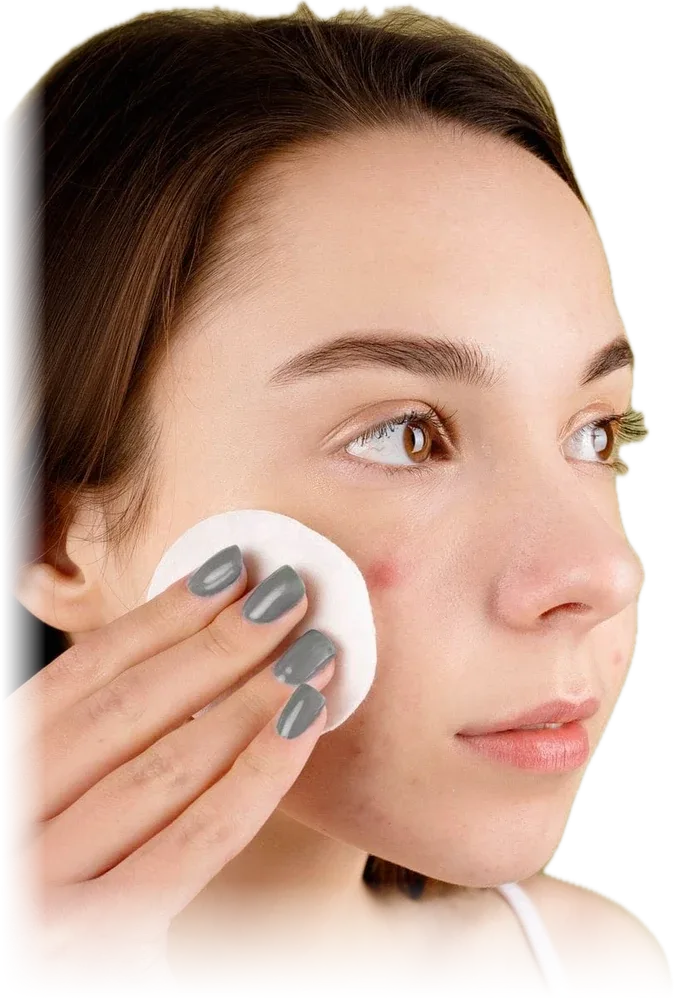
A chemical peel is one of the most clinically validated skin-resurfacing treatments available. By applying a controlled acid solution to the skin's surface, a peel induces controlled exfoliation of damaged epidermal cells, triggering the body's natural renewal process. The result: fresher skin texture, reduced pigmentation, and a more radiant complexion — without surgery or significant downtime.
How it works
- 1
Before Your Treatment
Your RN clinician will review your skin history, current medications, and Fitzpatrick skin type at a complimentary consultation.
- 2
During Treatment
The treatment area is cleansed and degreased.
- 3
After Treatment
Superficial peels produce mild redness and light flaking over 3–5 days.
What It Treats
Chemical peels address a wide range of skin concerns across all skin types when properly selected and applied.

Tap a dot or an area to see it up close.
Treats:
Is it right for you?
Safety & Skin Tone
One of the most common concerns patients bring to consultation is whether a chemical peel is safe for their skin tone. This is a valid and important question — and the honest answer is: it depends on the formulation and depth.
Research published in PMC (NCBI) notes that Fitzpatrick skin types IV–VI carry progressively higher risk of post-inflammatory hyperpigmentation (PIH) from medium-to-deep peels — making acid selection, concentration, and depth critical variables for darker skin tones. ↗
At Maison Zolara, our licensed RN clinicians are trained in Fitzpatrick skin typing and adjust every peel accordingly:
- Fitzpatrick I–III: Broader range of acid options and concentrations. Glycolic and salicylic peels are well-tolerated at standard strengths.
- Fitzpatrick IV–V: Lactic acid or low-strength mandelic/salicylic blends are preferred. We use lower concentrations and fewer passes to minimize PIH risk.
- Fitzpatrick VI: Conservative superficial peels only, with extended pre-treatment preparation and careful post-peel monitoring.
What to expect during and after treatment: Mild tingling or warmth during the peel is normal and expected. After a superficial peel, you may notice mild redness for 12–24 hours and light flaking or peeling over 3–5 days. This is the skin's natural renewal process — not a sign of damage. Medium-depth peels produce more visible peeling over 5–7 days. Avoid picking or pulling at peeling skin, as this can cause PIH regardless of skin tone.
Patients who are pregnant, breastfeeding, using isotretinoin (Accutane), or have active cold sores, open wounds, or certain skin conditions should not receive a chemical peel. Disclose all medications and medical history at your consultation. Our on-staff Medical Director provides clinical oversight of all treatment protocols.
Alternatives
Understanding how chemical peels compare to other resurfacing options helps you make an informed decision. The right choice depends on your skin concern, downtime tolerance, and skin type.
The table below compares the most common resurfacing modalities available in the Lansing market:
| Treatment | Mechanism | Depth | Downtime | Best For |
|---|---|---|---|---|
| Chemical Peel (Glycolic/Salicylic/Lactic) | Acid-induced exfoliation | Superficial to medium | 0–7 days | Pigmentation, acne, texture, glow |
| RF Microneedling | Radiofrequency + micro-channels | Dermal | 2–4 days | Acne scars, laxity, deep texture |
| Microdermabrasion | Physical abrasion | Superficial only | None | Mild texture, maintenance |
| Sublative RF Resurfacing | Fractional RF energy | Epidermal/dermal | 3–5 days | Acne scars, uneven texture |
| VI Peel | Multi-acid proprietary blend | Superficial to medium | 5–7 days | See dedicated VI Peel page |
A note on VI Peel: The VI Peel is a distinct, separately branded peel line with its own dedicated page at Maison Zolara. It uses a proprietary multi-acid blend and is a separate service from our Medical-Grade Chemical Peel. Visit our VI Peel page for full details.
For patients with deeper acne scars or significant skin laxity, RF Microneedling or Sublative RF Resurfacing may be more appropriate — and chemical peels can be combined with these treatments in a phased protocol.
Chemical Peel
Best for patients seeking targeted acid exfoliation for pigmentation, acne, fine lines, or dullness. Works at the epidermal level with superficial-to-medium options. Lower cost per session, repeatable monthly, and highly customizable by acid type and concentration.
RF Microneedling
Best for patients with deeper structural concerns — acne scars, skin laxity, or significant texture irregularity. Delivers radiofrequency energy into the dermis to stimulate collagen remodeling. Typically requires 3 sessions spaced 4–6 weeks apart for optimal results.
Am I a Good Candidate?
Chemical peels are one of the most versatile treatments in medical aesthetics — but they are not right for everyone. The following guide will help you understand whether a peel may be appropriate for your skin.
Good Candidates
- Adults with uneven skin tone, sun spots, or post-acne marks
- Patients with active acne or congested, oily skin (salicylic peel)
- Patients with fine lines, rough texture, or early photoaging
- All Fitzpatrick skin types I–VI when the correct formulation is selected
- Patients who want a low-downtime resurfacing option
- Those seeking a complement to injectables or RF treatments
Not a Good Fit
- Active cold sores or open wounds in the treatment area
- Current use of isotretinoin (Accutane) — wait 6 months after stopping
- Pregnancy or breastfeeding
- Recent radiation therapy to the face
- Allergy to aspirin (for salicylic acid peels)
- Patients seeking results for deep scars or severe laxity (consider RF Microneedling)
Before and after your visit
How It Works
A chemical peel works by applying an acid solution — glycolic, salicylic, lactic, or a combination — to the skin at a controlled pH and concentration. The acid disrupts the bonds between dead and damaged epidermal cells, causing them to shed and stimulating the production of new, healthier skin cells beneath.
According to a 2023 StatPearls review published by the National Institutes of Health, glycolic acid (an alpha-hydroxy acid) requires a neutralizing agent to cease its action, while salicylic acid (a beta-hydroxy acid) is more lipophilic and penetrates sebaceous follicles more effectively — making it particularly well-suited for acne-prone skin. ↗
Peel depth is determined by acid type, concentration, pH, and the number of passes applied:
- Superficial peels (glycolic, lactic, low-strength salicylic) target the outermost epidermis. Minimal downtime, ideal for maintenance and glow.
- Medium-depth peels penetrate into the papillary dermis. More visible peeling, 5–7 days social downtime, stronger results for pigmentation and fine lines.
- Deep peels (not offered at Maison Zolara) require physician administration and extended recovery.
Our licensed RN clinicians select the appropriate depth and formulation at consultation, ensuring the peel is matched to your skin's current condition and goals.
What to Expect
Here is what your chemical peel experience looks like at Maison Zolara, from consultation through recovery.
Before Your Treatment
Your RN clinician will review your skin history, current medications, and Fitzpatrick skin type at a complimentary consultation. You may be advised to discontinue retinoids 5–7 days before your peel and to avoid sun exposure. Pre-treatment with a tyrosinase inhibitor (such as a vitamin C or kojic acid serum) may be recommended for patients with Fitzpatrick IV–VI skin to reduce PIH risk.
During Treatment
The treatment area is cleansed and degreased. The acid solution is applied evenly and left on for a timed period based on your skin type and the selected formulation. You will feel mild tingling or warmth — this is normal. The acid is then neutralized (for glycolic acid) or removed, and a soothing post-peel serum and SPF are applied. Total treatment time is approximately 30–45 minutes.
After Treatment
Superficial peels produce mild redness and light flaking over 3–5 days. Medium-depth peels produce more visible peeling over 5–7 days. Keep skin hydrated, avoid active ingredients (retinoids, AHAs, BHAs) for 7 days post-peel, and apply broad-spectrum SPF 30+ daily. Do not pick at peeling skin. Results continue to improve over 2–4 weeks as new skin cells mature.
Aftercare
Proper aftercare is essential to achieving the best possible results and minimizing the risk of PIH or irritation. The following guidelines apply to all peel depths; your RN clinician will provide personalized instructions at your appointment.
Do
- Apply a gentle, fragrance-free moisturizer 2–3 times daily
- Use broad-spectrum SPF 30+ every morning, rain or shine
- Keep skin hydrated — drink water and avoid dehydrating environments
- Use a gentle, non-foaming cleanser for 7 days post-peel
- Allow peeling skin to shed naturally on its own timeline
- Contact us if you experience unusual redness, swelling, or blistering
Avoid
- Picking, peeling, or rubbing flaking skin
- Retinoids, AHAs, BHAs, or vitamin C for 7 days post-peel
- Direct sun exposure without SPF protection
- Saunas, steam rooms, or intense exercise for 48 hours
- Waxing or other resurfacing treatments for 2–4 weeks
- Makeup on actively peeling skin (wait until peeling subsides)
Pricing
Chemical peel pricing at Maison Zolara is transparent and confirmed at your complimentary consultation, where your RN clinician will recommend the appropriate formulation and depth for your skin.
- Standard pricing: From $275 per session
- Maison Circle member pricing: From $245 per session
- Package pricing: Available for series of 3 or 6 sessions — ask at consultation
Final pricing is confirmed at consultation based on the specific peel formulation, depth, and any add-on treatments selected. Maison Circle members receive member pricing on chemical peels and can track their treatment journey in the Zolara Care app (available on the App Store).
More about Chemical Peels
About Chemical Peels
At Maison Zolara, located in west Lansing at 4820 W Saginaw Hwy, our licensed registered nurse (RN) clinicians customize every peel to your skin type, concern, and Fitzpatrick classification. Whether you're coming from Okemos, East Lansing, or DeWitt, you'll receive a treatment plan built around your skin — not a one-size-fits-all protocol.
Medical-Grade Chemical Peel
Our treatment is the Medical-Grade Chemical Peel (Glycolic / Salicylic / Lactic Acid) — a professional-strength formulation available exclusively through licensed medical providers. Unlike retail or spa-grade peels, medical-grade acids are formulated at higher concentrations and lower pH levels, delivering measurable clinical results that over-the-counter products cannot replicate.
Glycolic Acid (AHA)
Derived from sugar cane, glycolic acid has the smallest molecular weight of the alpha-hydroxy acids, allowing deep epidermal penetration. It is the gold standard for photoaging, fine lines, and overall brightening.
Salicylic Acid (BHA)
A beta-hydroxy acid with lipophilic properties that allow it to dissolve within sebaceous follicles. It is anti-inflammatory, comedolytic, and the preferred choice for acne-prone and oily skin types.
Lactic Acid (AHA)
A larger-molecule alpha-hydroxy acid derived from milk. Lactic acid exfoliates more gently than glycolic acid, making it ideal for sensitive skin, melasma, and patients with Fitzpatrick skin types IV–VI who require a lower-risk approach.
Customized Blends
Our RN clinicians may combine acids or adjust concentrations based on your skin's response during the treatment. Combination formulations can address multiple concerns — such as acne and pigmentation — simultaneously.
Clinical bottom line: According to a 2023 peer-reviewed study published in Journal of Cosmetic Dermatology (PubMed ID 37227430), a combination peel containing lactic acid achieved improvements in signs of facial photoaging and was found safe and effective across all skin types. ↗
Serving Greater Lansing
Maison Zolara is located in west Lansing at 4820 W Saginaw Hwy, conveniently accessible from across mid-Michigan. We serve patients from Lansing, East Lansing, Okemos, Holt, DeWitt, Grand Ledge, Mason, Charlotte, St. Johns, Williamston, and the broader 30-mile radius.
Our hours are 9:00 AM – 7:00 PM Monday through Friday and 9:00 AM – 5:00 PM on Saturdays. Free consultations are available — book online or call us directly.
Whether you're a student at Michigan State looking for an acne solution, a professional in DeWitt seeking a quarterly skin refresh, or a patient from Grand Ledge exploring options for sun damage, our licensed RN clinicians are here to build a treatment plan around your skin and your schedule.
Clinical References
Khunger N, Sarkar R, Jain RK. Chemical Peels for Skin Resurfacing. StatPearls [Internet]. Treasure Island (FL): StatPearls Publishing; 2023 Oct. https://www.ncbi.nlm.nih.gov/books/NBK547752/
Kontochristopoulos G, et al. Treatment of mild-to-moderate facial cutaneous aging using a combination peel containing 6% trichloroacetic acid and 12% lactic acid. J Cosmet Dermatol. 2023 Nov;22(11):3033–3041. https://pubmed.ncbi.nlm.nih.gov/37227430/
Sharad J. Evidence and Considerations in the Application of Chemical Peels in Skin Disorders and Aesthetic Resurfacing. J Clin Aesthet Dermatol. PMC2921757. https://pmc.ncbi.nlm.nih.gov/articles/PMC2921757/
Page Disclaimer: The information on this page is provided for educational purposes only and does not constitute medical advice. Clinical references are sourced from peer-reviewed research and named institutions as cited below. Individual results vary. Consult a qualified healthcare provider before beginning any treatment.
The Medical Director provides clinical oversight of treatments performed at this practice. The Medical Director does not author, review, or endorse website content.
Your provider

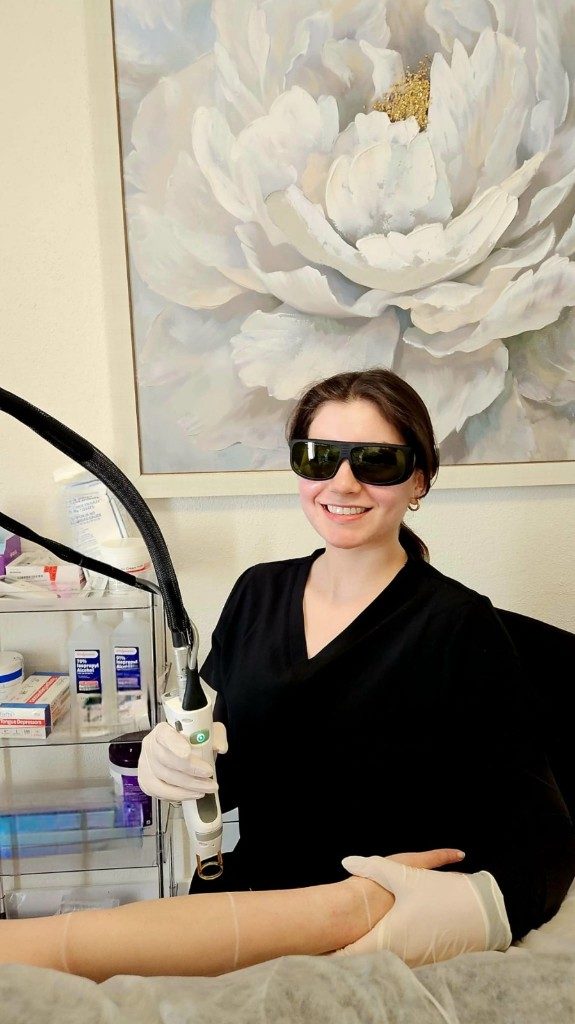
Your treatment will be performed by Palwasha Mohmand, RN, under medical director supervision.
Palwasha Mohmand, RN
Lead RN Injector & Aesthetic Clinician
Administers all injectable treatments, laser services, and RF protocols. Advanced certification in Sculptra biostimulators (AAFP-accredited, National Laser Institute).
Client reviews
“Palwasha is amazing! She takes the time to go through all the components of the treatment before she begins, explaining everything clearly so you know exactly what to expect.”
— Yasmin A. · Google Review
Questions, answered
What is a chemical peel?
A chemical peel is a skin-resurfacing treatment in which a licensed clinician applies an acid solution — such as glycolic, salicylic, or lactic acid — to the skin. The acid causes controlled exfoliation of damaged surface cells, revealing fresher, smoother skin underneath. It is one of the most clinically studied aesthetic treatments available, with applications ranging from acne and pigmentation to fine lines and dullness.
What does it do for your skin?
It accelerates the skin's natural cell turnover cycle, removing the buildup of dead and damaged epidermal cells. Depending on the acid used and the depth of the peel, it can fade pigmentation, clear congested pores, reduce the appearance of fine lines, improve skin texture, and restore radiance. Medium-depth peels also stimulate collagen production in the dermis over time.
Who is a good candidate?
Most adults with concerns about uneven tone, acne, texture, or early photoaging are candidates. Chemical peels can be safely performed on all Fitzpatrick skin types I–VI when the formulation is properly selected. Patients who are pregnant, on isotretinoin, or have active skin infections are not candidates. A complimentary consultation with our RN clinicians will determine the right approach for your skin.
How much does it cost?
Chemical peels at Maison Zolara start From $275 per session. Maison Circle members start From $245. Final pricing is confirmed at your complimentary consultation based on the formulation and depth selected. Package pricing for series of 3 or 6 sessions is also available.
Do chemical peels hurt?
Most patients describe a mild tingling, warmth, or slight stinging sensation during the treatment — particularly with glycolic acid. This is normal and subsides within minutes of neutralization or removal. Salicylic and lactic acid peels tend to feel milder. Discomfort is brief and well-tolerated by the vast majority of patients.
How long do results last?
Results from a superficial peel are typically visible for 1–2 months. Medium-depth peel results can last 3–6 months or longer with proper sun protection and skincare. According to dermatology practices, the longevity of results depends significantly on sun exposure, skincare routine, and whether treatments are maintained on a regular schedule. Most patients benefit from a series of 3–6 peels spaced 4–6 weeks apart, followed by quarterly maintenance.
How many sessions do I need?
For most concerns — acne, pigmentation, texture — a series of 3–6 peels spaced 4–6 weeks apart produces the best results. A single peel can provide a noticeable glow and skin refresh. Your RN clinician will recommend a treatment plan at consultation based on your specific goals and skin condition.
What is the downtime?
Superficial peels: mild redness for 12–24 hours, light flaking over 3–5 days. Most patients return to normal activities immediately. Medium-depth peels: more visible peeling over 5–7 days; plan accordingly for social events. There is no surgical downtime — you can drive yourself home and resume most daily activities the same day.
Can I combine a peel with other treatments?
Yes. Chemical peels pair well with neuromodulators, dermal fillers, and medical-grade skincare. They can also be used in a phased protocol with RF Microneedling or Sublative RF Resurfacing — though not on the same day. Your RN clinician will advise on sequencing at consultation.
Ready to see if Chemical Peels is right for you?
Book a free consultation with Palwasha. We’ll talk through your goals and create a personalized plan. No pressure, no surprise pricing.