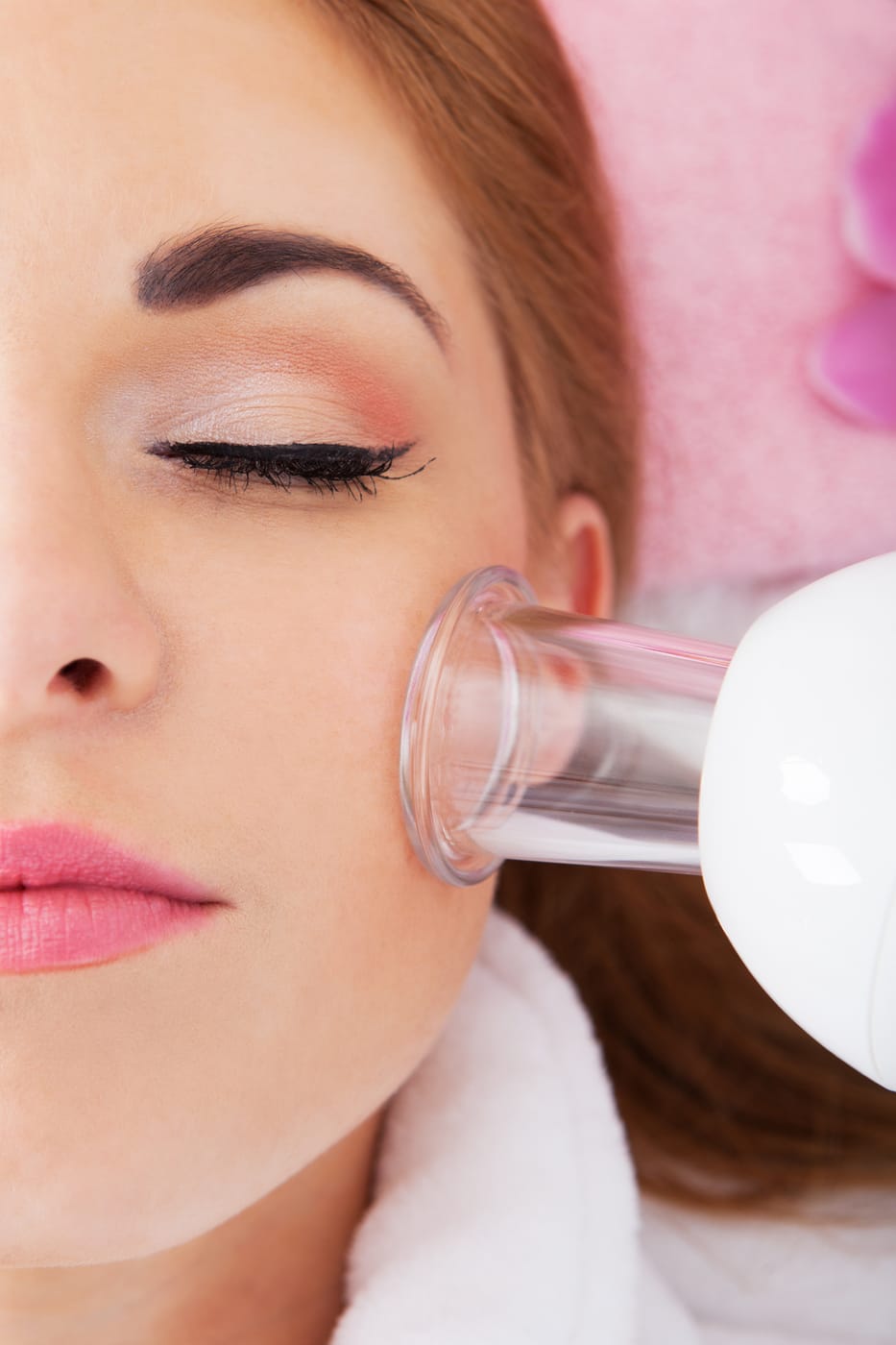
Laser Resurfacing
Smoother texture, fewer fine lines.
- Candela GentleMax Pro Plus
- FDA-cleared technology
- All skin types
- MD-supervised
Medically reviewed by Palwasha Mohmand, RN · Medical Director-supervised care
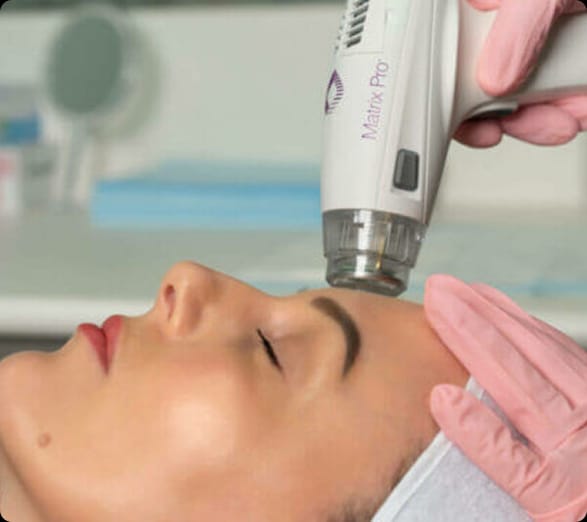
What is Laser Resurfacing?
Laser skin resurfacing has become one of the most sought-after treatments for patients who want real, visible improvement in skin quality without the extended recovery of surgical or ablative procedures. At Maison Zolara, located in west Lansing at 4820 W Saginaw Hwy, our licensed registered nurse (RN) clinicians deliver non-ablative laser resurfacing under the clinical oversight of our on-staff Medical Director — bringing medical-grade precision to a comfortable, results-focused experience.
How it works
- 1
Before Your Treatment
Your journey begins with a complimentary consultation with one of our licensed RN clinicians.
- 2
During Treatment
A topical numbing cream is applied to the treatment area approximately 30–45 minutes before the session begins.
- 3
After Treatment
Immediately following treatment, the skin will appear pink to red — similar to a mild sunburn.
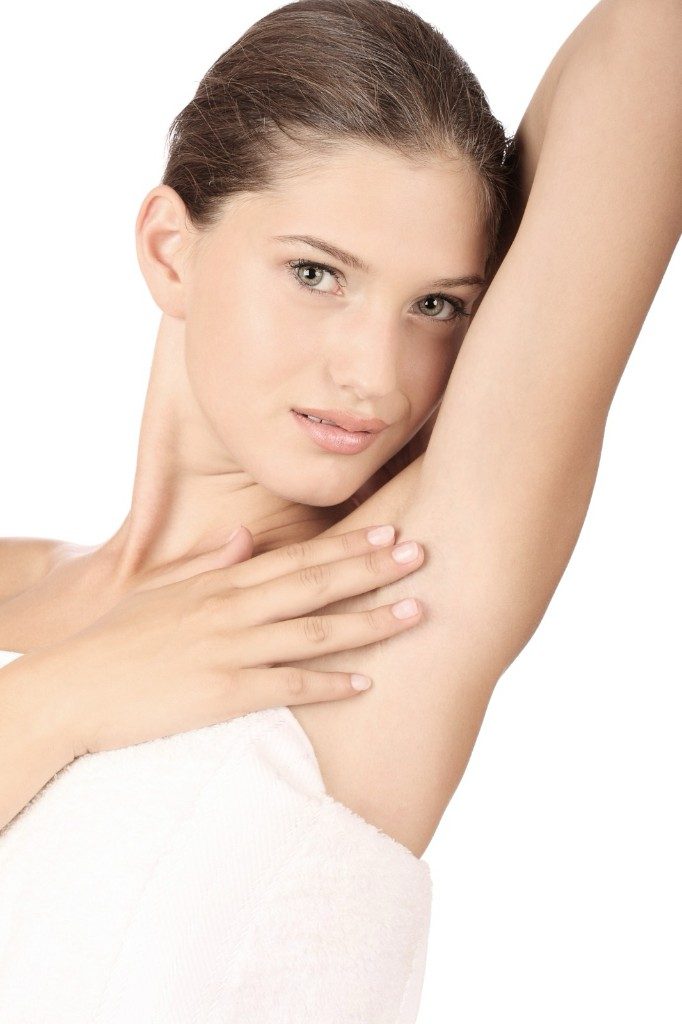
What It Treats
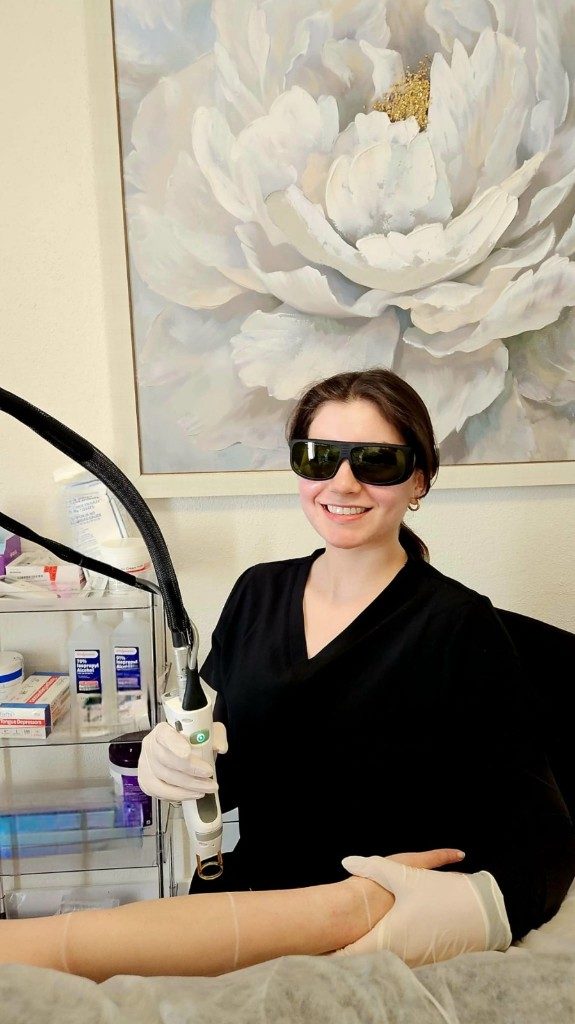
Non-ablative laser resurfacing addresses a wide range of skin concerns driven by collagen loss, sun damage, and the natural aging process.
Tap a dot or an area to see it up close.
Treats:
Is it right for you?
Ablative vs. Non-Ablative
One of the most common questions patients ask is how the laser resurfacing offered at Maison Zolara compares to the ablative CO2 and erbium laser treatments they may have read about — or to branded systems like Fraxel, Clear + Brilliant, or PicoSure. Understanding the distinction helps set realistic expectations.
The treatment performed at Maison Zolara is non-ablative laser skin renewal — meaning the outer layer of skin (epidermis) is preserved throughout treatment. This is a fundamentally different approach from traditional ablative CO2 resurfacing, which vaporizes the epidermis and requires 1–2 weeks of intensive wound care, significant social downtime, and carries higher risks of infection, scarring, and prolonged redness.
The table below summarizes the key differences:
| Feature | Non-Ablative (Maison Zolara) | Ablative CO2 / Erbium |
|---|---|---|
| Epidermis removed? | No | Yes |
| Typical downtime | 1–5 days (redness, mild swelling) | 7–14+ days |
| Sessions needed | Series of 3–6 recommended | Often 1 (with longer recovery) |
| Risk of scarring | Low | Moderate to higher |
| Suitable for darker skin tones | Yes (with proper parameters) | Higher risk |
| Results timeline | Gradual over weeks–months | More immediate but longer recovery |
| Depth of collagen remodeling | Moderate | Deep |
Non-Ablative Resurfacing
Targets the dermis while preserving the epidermis. Ideal for patients who want meaningful improvement in texture, tone, and early fine lines with minimal downtime. Results build gradually over a series of sessions as new collagen matures. Best suited for maintenance, prevention, and mild-to-moderate concerns.
Ablative CO2 Resurfacing
Removes the outer skin layer entirely, allowing for deeper remodeling. Appropriate for more advanced photoaging, deeper wrinkles, or significant textural irregularities. Requires 1–2 weeks of wound care and carries higher risk of complications. Typically performed in surgical or hospital-based settings.
Fraxel, CO2 Laser, Clear + Brilliant, and PicoSure are separate branded systems not available at Maison Zolara. The comparison above is provided for educational context only.
Safety & Risks
Non-ablative laser resurfacing has an established safety profile when performed by trained clinicians using appropriate parameters. Because the epidermis is preserved, the risk of infection, scarring, and prolonged healing is significantly lower than with ablative approaches.
Common, expected side effects include temporary redness, mild swelling, and warmth in the treated area — typically resolving within 24–72 hours. Some patients experience mild peeling or flaking as the skin renews over the following days.
Skin Tone Considerations: Patients with darker Fitzpatrick skin types (IV–VI) should discuss their skin tone history with their clinician before treatment. A 2023 study published in PMC by the American Academy of Dermatology noted that non-ablative fractional resurfacing in darker skin tones can carry a risk of post-inflammatory hyperpigmentation (PIH), which is typically self-limiting but should be managed with appropriate pre-treatment protocols and conservative energy settings. ↗
Who Should Avoid Treatment
Active skin infections, open wounds, or active inflammatory acne in the treatment area are contraindications. Patients who are pregnant, have a history of keloid scarring, or are taking photosensitizing medications should disclose this during consultation. Patients with a recent history of isotretinoin use (within 6 months) should also notify their clinician.
Realistic Expectations
Non-ablative resurfacing produces gradual, cumulative results — not the dramatic single-session transformation associated with ablative procedures. Most patients see meaningful improvement after a series of 3–6 sessions spaced 4–6 weeks apart, with continued collagen remodeling for up to 6 months after the final session.
Am I a Good Candidate?
Laser resurfacing with the Candela GentleMax Pro Plus is appropriate for a wide range of patients. The best way to confirm candidacy is through a complimentary consultation — but the following provides a general guide.
Good Candidates
- Adults with fine lines, uneven texture, or mild sun damage
- Patients seeking skin renewal with minimal downtime
- Fitzpatrick skin types I–VI (with appropriate parameter adjustments)
- Patients who have not used isotretinoin in the past 6 months
- Those committed to a series of sessions for cumulative results
- Patients in the greater Lansing area including Mason, Williamston, and Charlotte
Not a Good Fit
- Active skin infections or open wounds in the treatment area
- Active inflammatory acne in the treatment zone
- Pregnancy or breastfeeding
- History of keloid scarring
- Current use of photosensitizing medications (discuss with clinician)
- Patients expecting single-session dramatic results comparable to ablative CO2
Before and after your visit
How It Works
Non-ablative laser resurfacing works by delivering controlled laser energy beneath the skin's surface without removing or vaporizing the outer layer (the epidermis). This is the key distinction from traditional ablative CO2 resurfacing: the epidermis remains intact, which dramatically reduces healing time and the risk of complications.
The laser energy heats the dermis — the deeper structural layer of the skin — triggering a controlled wound-healing response. Fibroblasts, the cells responsible for producing collagen and elastin, are stimulated to generate new structural proteins. Over the weeks and months following treatment, the skin gradually becomes firmer, smoother, and more even in tone as this new collagen matures.
According to a 2024 peer-reviewed study published in PubMed (Wang JV et al.), non-ablative fractional diode laser resurfacing demonstrated measurable improvements in photodamage markers including rhytides, skin texture, dyschromia, pore size, and overall appearance across multiple Fitzpatrick skin types. ↗
Clinical note: Research published in PMC by the American Academy of Dermatology found that non-ablative fractional laser resurfacing promotes neocollagenesis with significantly fewer complications and less discomfort than ablative techniques, making it a preferred option for patients seeking skin renewal with minimal social downtime. ↗
What to Expect
Knowing what to expect at each stage of your treatment journey helps you prepare and get the most from your results.
Before Your Treatment
Your journey begins with a complimentary consultation with one of our licensed RN clinicians. We'll review your skin concerns, medical history, and any medications or supplements you're taking. In the days before your appointment, avoid sun exposure, self-tanning products, and retinoids. Arrive with clean skin, free of makeup and skincare products.
During Treatment
A topical numbing cream is applied to the treatment area approximately 30–45 minutes before the session begins. The Candela GentleMax Pro Plus delivers laser energy in precise pulses, with the integrated Dynamic Cooling Device providing a cooling burst before each pulse to protect the epidermis and improve comfort. Most patients describe the sensation as a series of brief snapping or warming feelings. A full facial treatment typically takes 20–40 minutes depending on the area covered.
After Treatment
Immediately following treatment, the skin will appear pink to red — similar to a mild sunburn. This typically resolves within 24–72 hours. Mild swelling may be present, particularly around the eyes, and usually subsides within 1–2 days. Some patients experience light flaking or peeling in the days following treatment as the skin renews. You can return to most normal activities the following day, though we recommend avoiding direct sun exposure and wearing SPF 30+ daily.
Aftercare
Proper aftercare is essential to achieving the best possible results and protecting your skin during the renewal process. The following guidelines apply to the days immediately following your laser resurfacing session.
Do
- Apply a gentle, fragrance-free moisturizer as directed
- Use SPF 30 or higher daily — sun protection is non-negotiable
- Keep the skin cool and avoid excessive heat (saunas, hot showers) for 48 hours
- Stay hydrated and allow the skin to peel naturally if flaking occurs
- Contact our team if you experience unexpected symptoms
Avoid
- Direct sun exposure for at least 2 weeks post-treatment
- Retinoids, AHAs, BHAs, and active exfoliants for 5–7 days
- Picking, scrubbing, or rubbing the treated skin
- Heavy makeup for the first 24–48 hours
- Strenuous exercise that causes significant sweating for 48 hours
Pricing
Laser resurfacing at Maison Zolara is priced transparently, with no hidden fees. Final pricing is confirmed at your complimentary consultation based on the treatment area and your individual plan.
- Standard pricing: From TBD per session
- Maison Circle members: From TBD per session
- Package pricing is available for patients committing to a series of sessions
Maison Circle members receive member pricing on laser resurfacing and can track their treatment journey in the Zolara Care app (available on the App Store).
Final pricing is confirmed at consultation. Individual treatment plans vary based on area size, skin concerns, and number of sessions recommended.
More about Laser Resurfacing
About Laser Resurfacing
Whether you're dealing with uneven texture from sun exposure, fine lines that skincare alone can't address, or the early signs of skin laxity, laser resurfacing offers a clinically supported pathway to renewal. Patients from across the greater Lansing area — including Okemos, East Lansing, Holt, and DeWitt — visit our west Lansing medspa for this treatment.
Candela GentleMax Pro Plus
Maison Zolara performs laser resurfacing using the Candela GentleMax Pro Plus — a dual-wavelength platform that represents the current standard in medical-grade laser aesthetics. This is the same platform used for our laser hair reduction service, and its versatility across multiple wavelengths allows our licensed RN clinicians to tailor treatment parameters precisely to each patient's skin type and concern.
Dual Wavelength Platform
The GentleMax Pro Plus combines a 755 nm Alexandrite laser and a 1064 nm Nd:YAG laser in a single system, enabling targeted treatment across a broad range of skin tones and conditions — from Fitzpatrick skin types I through VI.
Dynamic Cooling Device (DCD)
The integrated Dynamic Cooling Device delivers a cryogen spray to the skin surface milliseconds before each laser pulse, protecting the epidermis and significantly improving patient comfort during treatment.
Precision Energy Delivery
Adjustable pulse durations — including the shortest 2 ms pulse duration in the Gentle Pro series — allow clinicians to optimize energy delivery for each patient's specific skin concern and tolerance.
Clinically Proven Performance
Built on over 20 years of clinical data, the GentleMax Pro Plus is Candela's FDA-cleared dual-wavelength platform for laser aesthetics, with a safety and efficacy record across diverse patient populations.
Serving the Greater Lansing Area
Maison Zolara is located in west Lansing at 4820 W Saginaw Hwy, conveniently accessible from across the mid-Michigan region. We serve patients from Lansing, East Lansing, Okemos, Holt, DeWitt, Grand Ledge, Mason, Williamston, Charlotte, St. Johns, and the surrounding communities — all within our 30-mile service radius.
Our clinic is open 9:00 AM – 7:00 PM Monday through Friday and 9:00 AM – 5:00 PM on Saturdays. Complimentary consultations are available by appointment — book yours today.
Clinical References
Wang JV, Friedman PM, Agron S, Konda A, et al. Nonablative Fractional Diode Laser Resurfacing (1440 nm and 1927 nm) for Photoaged Skin. PubMed. 2024. https://pubmed.ncbi.nlm.nih.gov/39190540/
Tierney EP, Hanke CW, Watkins L. Sequential facial skin rejuvenation with intense pulsed light and non-ablative fractionated laser resurfacing in Fitzpatrick skin type II–IV patients: A prospective multicenter analysis. PMC / American Academy of Dermatology. 2019. https://pmc.ncbi.nlm.nih.gov/articles/PMC6585794/
Adverse events associated with 1540-nm nonablative fractional resurfacing in darker skin: A retrospective study. PMC / American Academy of Dermatology. 2023. https://pmc.ncbi.nlm.nih.gov/articles/PMC10835438/
Candela Medical. GentleMax Pro Plus Platform Overview. https://candelamedical.com/gmpp/
Page Disclaimer: The information on this page is provided for educational purposes only and does not constitute medical advice. Clinical references are sourced from peer-reviewed research and named institutions as cited below. Individual results vary. Consult a qualified healthcare provider before beginning any treatment.
The Medical Director provides clinical oversight of treatments performed at this practice. The Medical Director does not author, review, or endorse website content.
Candela® and GentleMax Pro Plus® are registered trademarks of Candela Corporation. Maison Zolara is an authorized Candela partner.
Your provider

Your treatment will be performed by Palwasha Mohmand, RN, under medical director supervision.
Palwasha Mohmand, RN
Lead RN Injector & Aesthetic Clinician
Administers all injectable treatments, laser services, and RF protocols. Advanced certification in Sculptra biostimulators (AAFP-accredited, National Laser Institute).
Client reviews
“Palwasha is amazing! She takes the time to go through all the components of the treatment before she begins, explaining everything clearly so you know exactly what to expect.”
— Yasmin A. · Google Review
Questions, answered
What is the difference between ablative and non-ablative laser resurfacing?
Ablative laser resurfacing (such as CO2 or erbium) removes the outer layer of skin entirely, requiring 1–2 weeks of wound care and carrying higher risks of infection and scarring. Non-ablative resurfacing — the type offered at Maison Zolara — preserves the epidermis while delivering thermal energy to the dermis to stimulate collagen. The result is meaningful skin renewal with significantly less downtime, typically 1–5 days of redness and mild swelling rather than weeks of recovery.
How much downtime does it require?
Most patients experience 1–3 days of redness and mild swelling following a non-ablative session — similar to a moderate sunburn. Some patients experience light flaking in the days that follow. The majority of patients return to normal activities the next day, though we recommend avoiding direct sun exposure and wearing SPF daily throughout the healing process. This is one of the key advantages over ablative CO2 resurfacing, which typically requires 7–14+ days of dedicated wound care.
What does laser resurfacing cost at Maison Zolara?
Laser resurfacing starts From TBD per session for standard pricing. Maison Circle members start From TBD per session. Package pricing is available for patients committing to a series of sessions. Final pricing is always confirmed at your complimentary consultation, where we'll build a personalized treatment plan based on your specific concerns and goals.
How many sessions will I need?
Most patients benefit from a series of 3–6 sessions spaced 4–6 weeks apart for optimal collagen remodeling results. Maintenance sessions are typically recommended every 6–12 months thereafter. The exact number depends on your skin concerns, starting condition, and goals — which is why we always begin with a consultation before recommending a treatment plan.
Is it painful?
Most patients describe the sensation as a series of brief snapping or warming feelings — similar to the snap of a rubber band. The Candela GentleMax Pro Plus's integrated Dynamic Cooling Device delivers a cryogen burst before each laser pulse, which significantly improves comfort. A topical numbing cream is applied before treatment to further minimize discomfort. The majority of patients tolerate the procedure well without significant pain.
When will I see results?
Because non-ablative resurfacing works by stimulating the body's natural collagen production, results appear gradually. Most patients notice initial improvements in skin texture and tone within 2–4 weeks of their first session, with more significant results building over the course of a series. Collagen remodeling continues for up to 6 months after the final session, so the full benefit of a treatment series is often seen several months after completion.
Is it safe for darker skin tones?
Non-ablative resurfacing can be performed safely across a range of skin tones, including darker Fitzpatrick skin types, when appropriate parameters are used. Our licensed RN clinicians are trained to adjust energy settings and treatment protocols based on your individual skin tone and history. Patients with darker skin tones should discuss their full skin history during consultation, as there is a risk of temporary post-inflammatory hyperpigmentation that can be minimized with proper pre-treatment protocols.
How does it compare to RF Microneedling or Sublative RF?
These are complementary — not competing — treatments. Non-ablative laser resurfacing excels at addressing pigmentation, sun damage, and surface texture. RF Microneedling and Sublative RF Resurfacing are particularly effective for deeper scar remodeling, skin laxity, and textural irregularities at a different tissue depth. Many patients benefit from a combination approach, which we can discuss during your consultation.
Ready to see if Laser Resurfacing is right for you?
Book a free consultation with Palwasha. We’ll talk through your goals and create a personalized plan. No pressure, no surprise pricing.